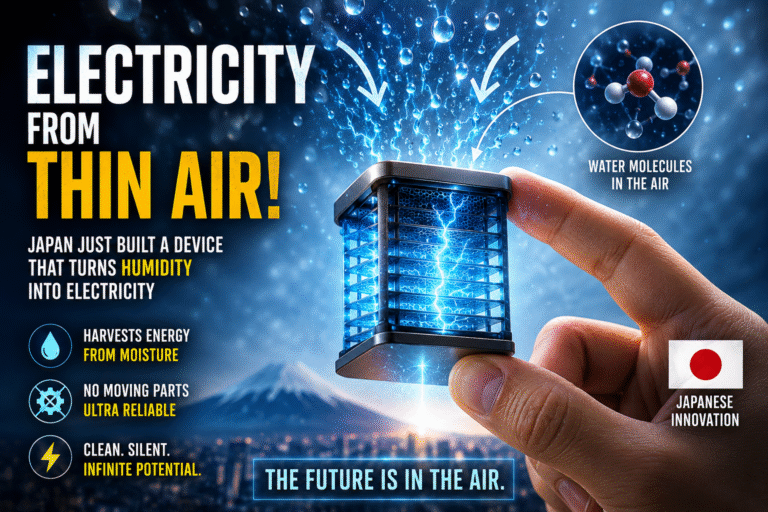
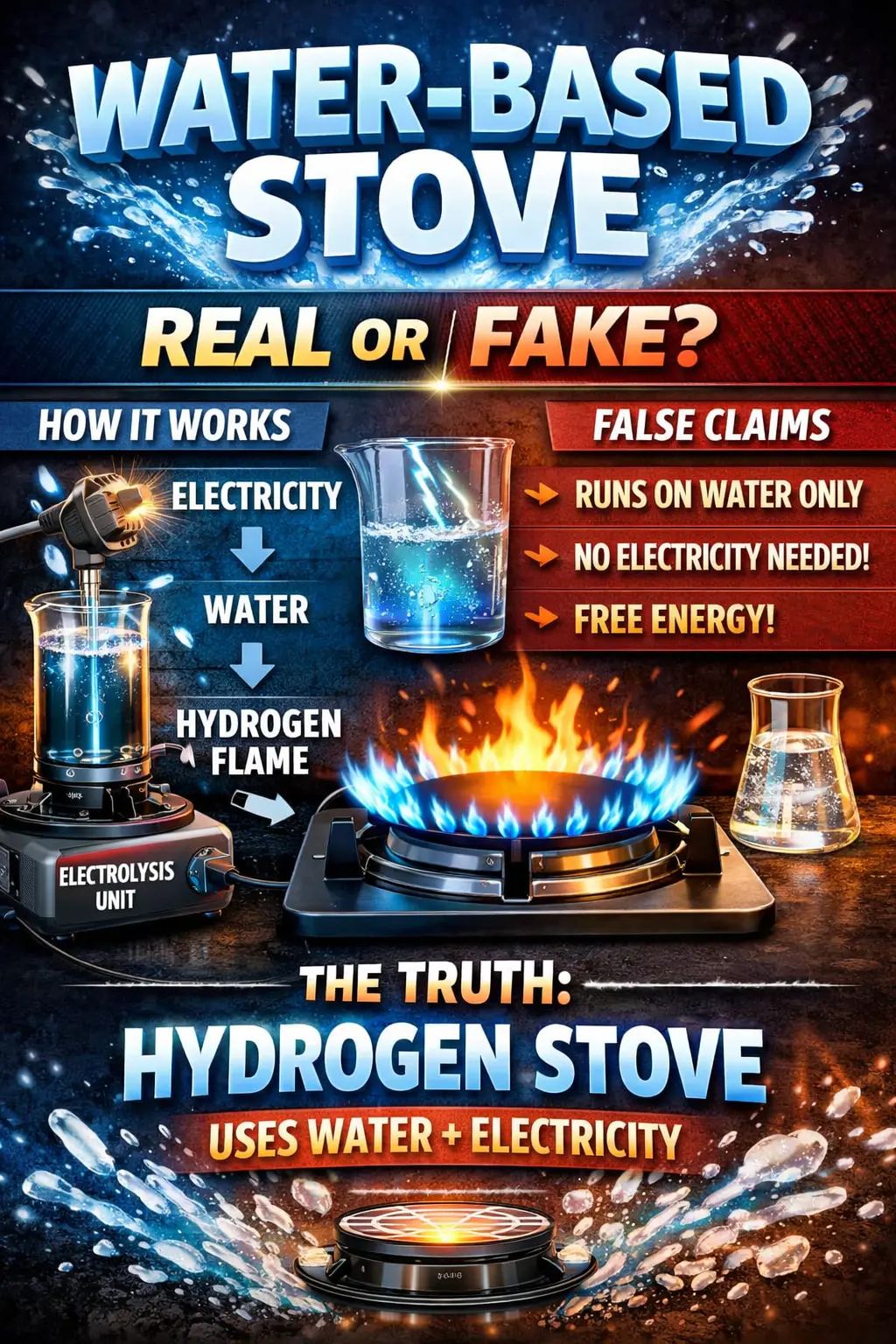
In recent years, videos about a “water-based stove” have gone viral across social media. Many claim that it has even been suggested that just pour water into the stove and the fire will start, which will cook the food—without gas, electricity, or fuel.
But is this really possible? Or is it just another internet myth?
In this article, we will break down the science, reality, and myths behind water-powered stoves in a simple and easy-to-understand way.
What Is a Water-Based Stove?
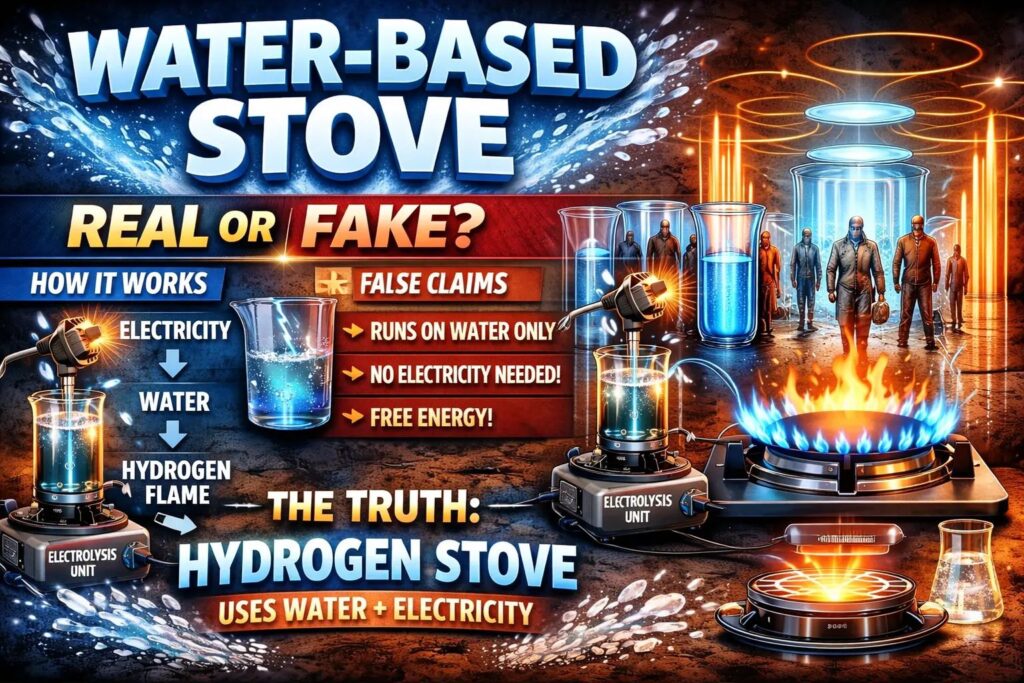
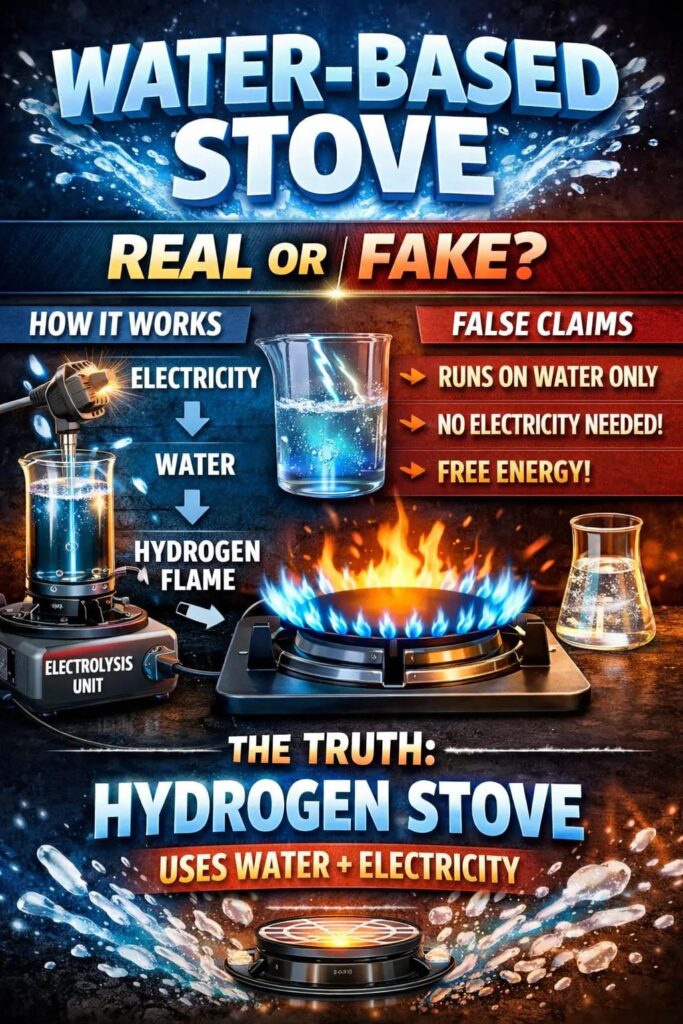
A water-based stove is not actually powered by water alone. In reality, it is a hydrogen-powered stove Where water is only used as a source of energy, not fire being made from water.
The system works by converting water (H₂O) into hydrogen gas, which is then burned to produce heat for cooking.
How Does It Work?
Electrolysis is the scientific process behind this water-powered stove.
Step-by-step process:
- Water is poured into the device
- Electricity is applied to the water
- Water splits into:
- Hydrogen (H₂)
- Oxygen (O₂)
- Hydrogen gas is burned to create a flame 🔥
This flame is then used for cooking food, just like a normal gas stove.
The Biggest Misconception
Many viral videos claim:
- “This stove runs only on water”
- “No electricity required”
- “Free energy forever”
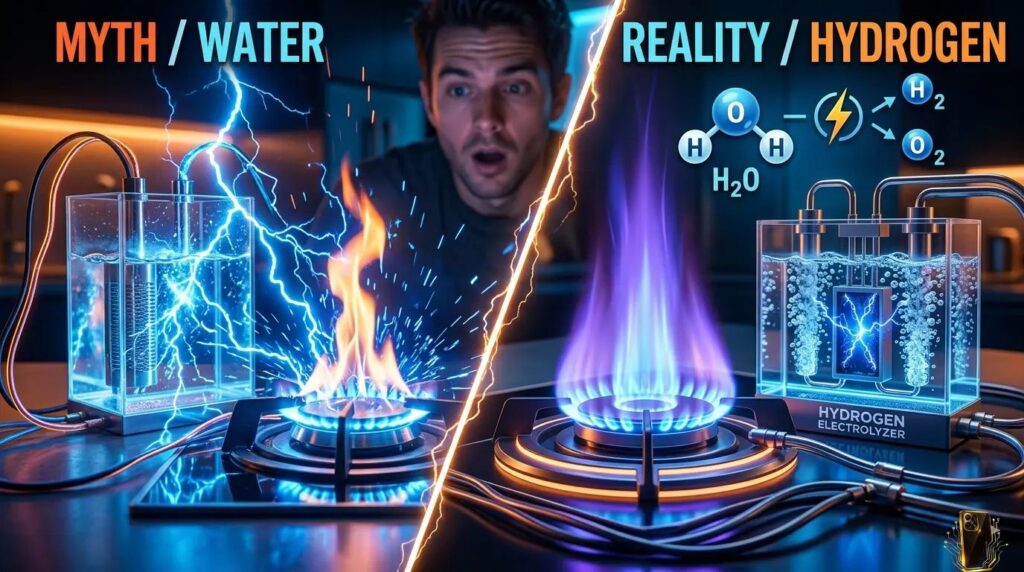
❌ These claims are false and misleading
👉 The truth is:
Water itself is not a fuel.
In fact, electricity is used a lot to break water down into hydrogen and oxygen, but it’s still okay because it’s a means of producing fire without gas.
This follows the basic law of physics:
👉 Law of Conservation of Energy
Energy cannot be created from nothing, you must always put energy in to get energy out.
Why People Get Confused
Water-based stoves look impressive because:
- They produce a real flame
- They use only a small amount of water
- They appear clean file without any dangerous gas or dangerous chemical
But what you don’t see is:
The electric power source behind the system.
The energy used to split water.
Real-World Applications
Although many viral claims are exaggerated, the technology itself is real and being developed for:
- Eco-friendly cooking systems
- Alternative fuel research
Some modern prototypes can:
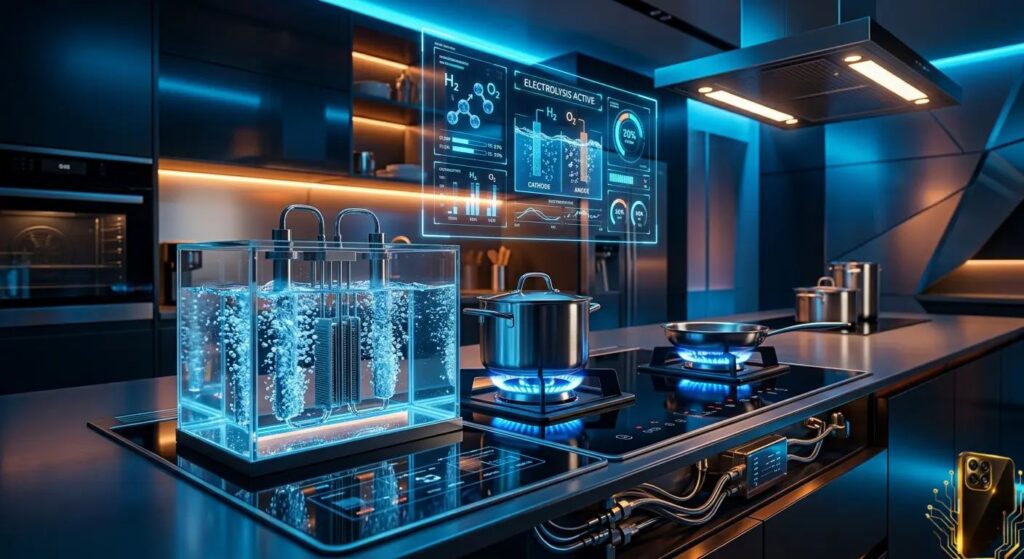
- Run for several hours
- Use small amounts of water
- Be powered by solar panels
✅ Advantages of Water-Based (Hydrogen) Stoves
- 🔥 Clean energy (no smoke or harmful gases)
- 🌱 Environmentally friendly
- 🔌 Can work with renewable energy like solar
- 🚫 No need for LPG cylinders
❌ Disadvantages
- ⚡ Requires electricity
- 💰 Expensive technology
- ⚠️ Hydrogen gas is highly flammable
- 🏠 Not widely available for home use
🧠 Final Verdict
Water-based stoves are not fake, but they are also not magical devices.
👉 They are simply hydrogen stoves powered by electricity, using water as a medium—not as a direct fuel.
Conclusion
The idea of cooking with water sounds revolutionary, but it is best solution where natural gas is not available in some regions.
While this technology holds promise for a cleaner fire future, it is important to understand the reality behind viral trends and avoid misinformation.
About the Author