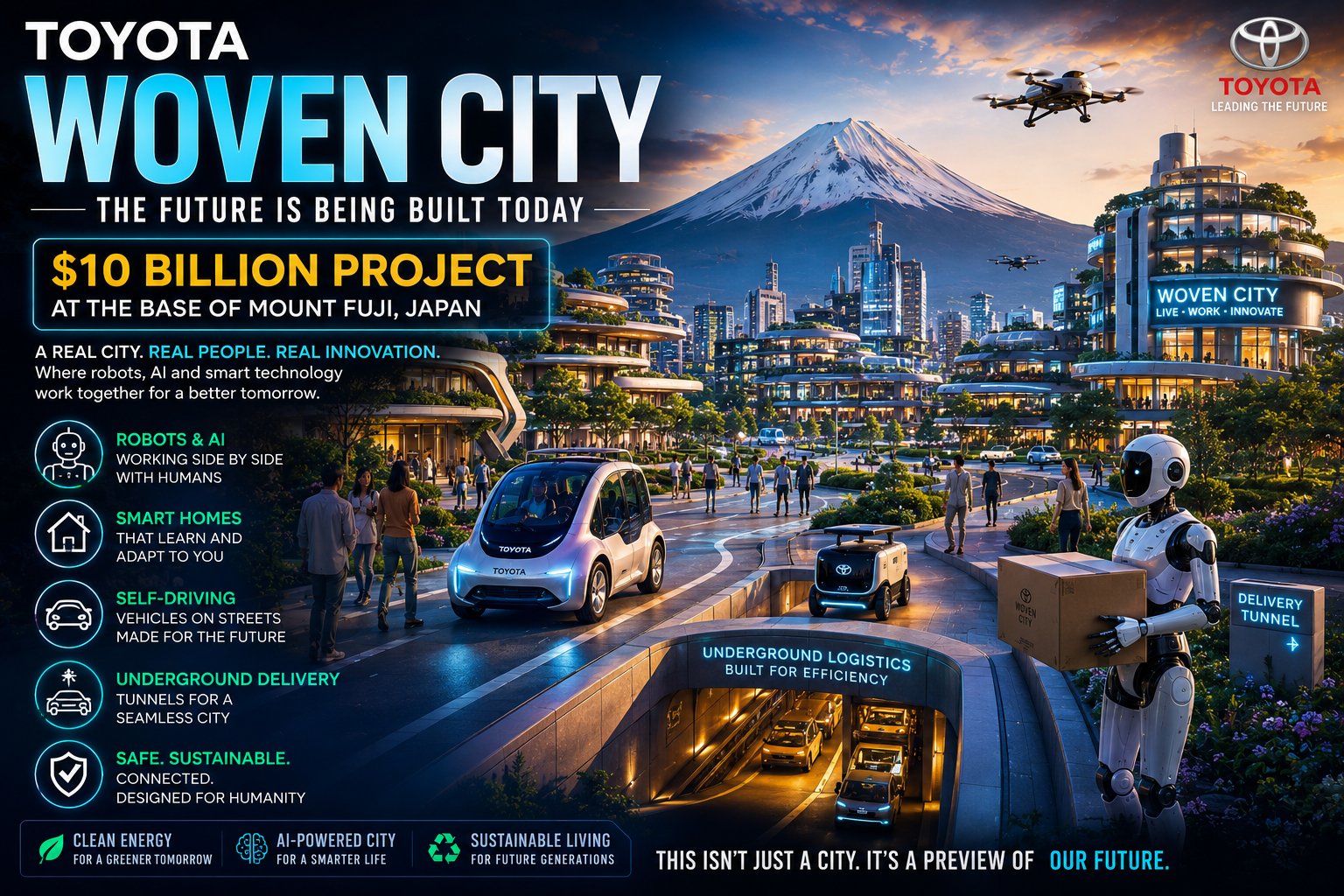
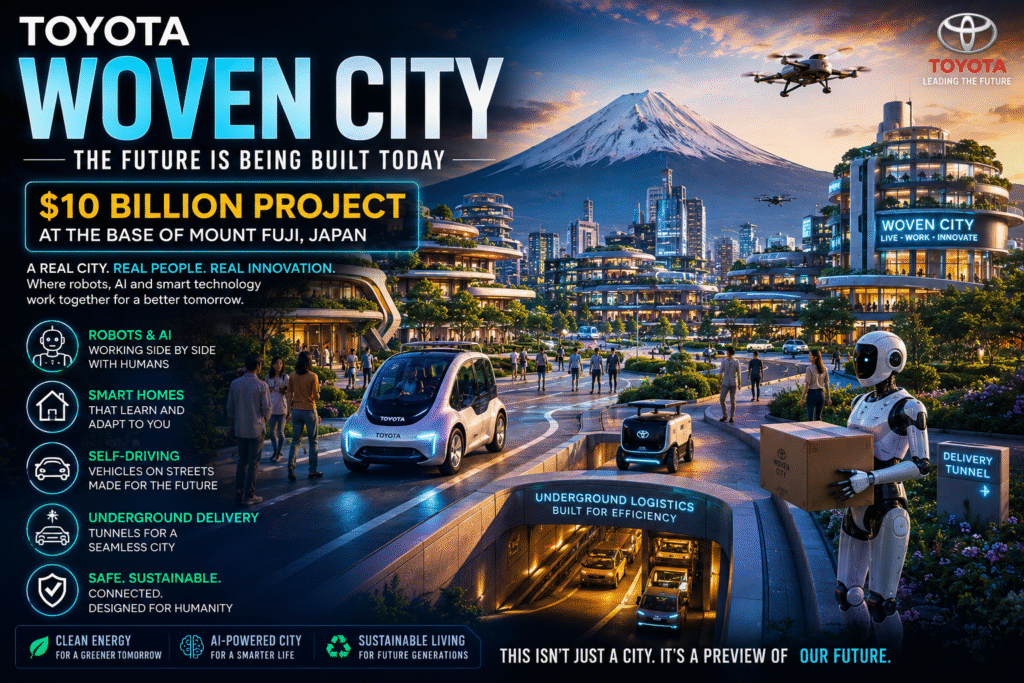
Toyota, known for its innovation in the automotive industry, is taking a groundbreaking leap into the future with the development of Toyota Woven City. Situated at the base of the iconic Mount Fuji in Japan, this visionary project aims to create a fully connected ecosystem that embraces advanced technologies and sustainable living.
A Smart City Concept
Unveiled in January 2020, Toyota Woven City is not just a city; it is a living laboratory designed to explore and develop new technologies for mobility, urban living, and environmental sustainability. The project spans over 175 acres and is being built as a place where people can live, work, and engage with innovations in a real-world setting.
Key Features
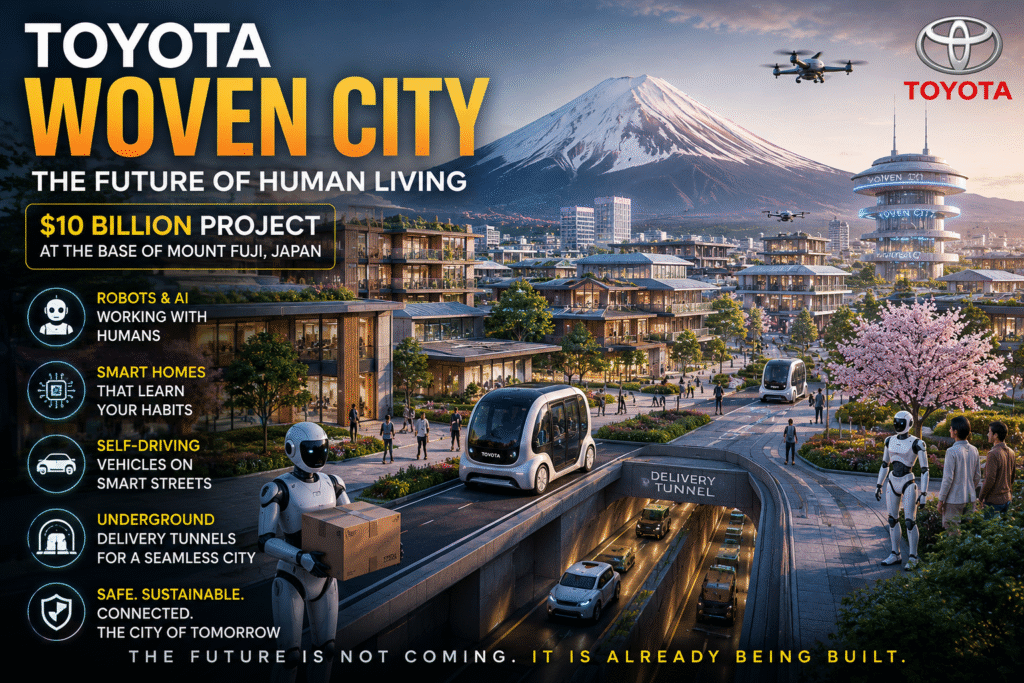
- Connected Mobility: At the heart of Woven City is its commitment to integrating advanced mobility solutions. Autonomous vehicles, personal mobility devices, and public transportation systems will operate harmoniously, promoting seamless movement throughout the city.
- Sustainable Design: Toyota Woven City emphasizes sustainability with eco-friendly buildings and infrastructure. The city is designed to run on hydrogen fuel cells and renewable energy sources, significantly reducing its carbon footprint.
- Smart Infrastructure: Equipped with cutting-edge technologies like IoT, AI, and big data, the city will monitor and manage various aspects of urban life, from traffic flow to energy consumption, enhancing the quality of life for its residents.
- Community Living: The city is designed to foster a strong sense of community. It offers diverse housing options, green spaces, and facilities that encourage resident interaction, social engagement, and cultural activities.
Testing Ground for Innovations
Woven City will serve as a testing ground for new innovations in various fields including transportation, robotics, and urban planning. By allowing researchers, engineers, and businesses to work directly within the city, Toyota aims to accelerate the development of smart city technologies that could be implemented globally.
Health and Well-being
Health and safety are paramount in the design of the city. Woven City plans to integrate health monitoring systems to promote well-being among its residents. These systems will leverage technology to provide real-time health insights and facilitate access to healthcare services.
Moving Forward
Toyota Woven City is a bold step towards the future, representing a shift in how urban environments are conceived and developed. Construction began in 2021, and the city is expected to evolve over the next few years into a vibrant community of innovation.
As the world faces challenges such as climate change, urbanization, and an aging population, projects like Toyota Woven City hold the potential to transform our approach to city living. By harnessing the latest technologies and prioritizing sustainability, Toyota envisions a place where people can thrive alongside the advancements of the future.
Conclusion
In summary, Toyota Woven City stands as a testament to the possibilities that lie ahead in urban planning and technology. It resonates with the idea that cities can be more than just places where we live—they can be ecosystems of innovation, sustainability, and community, paving the way for a better future for generations to come.
About the Author