
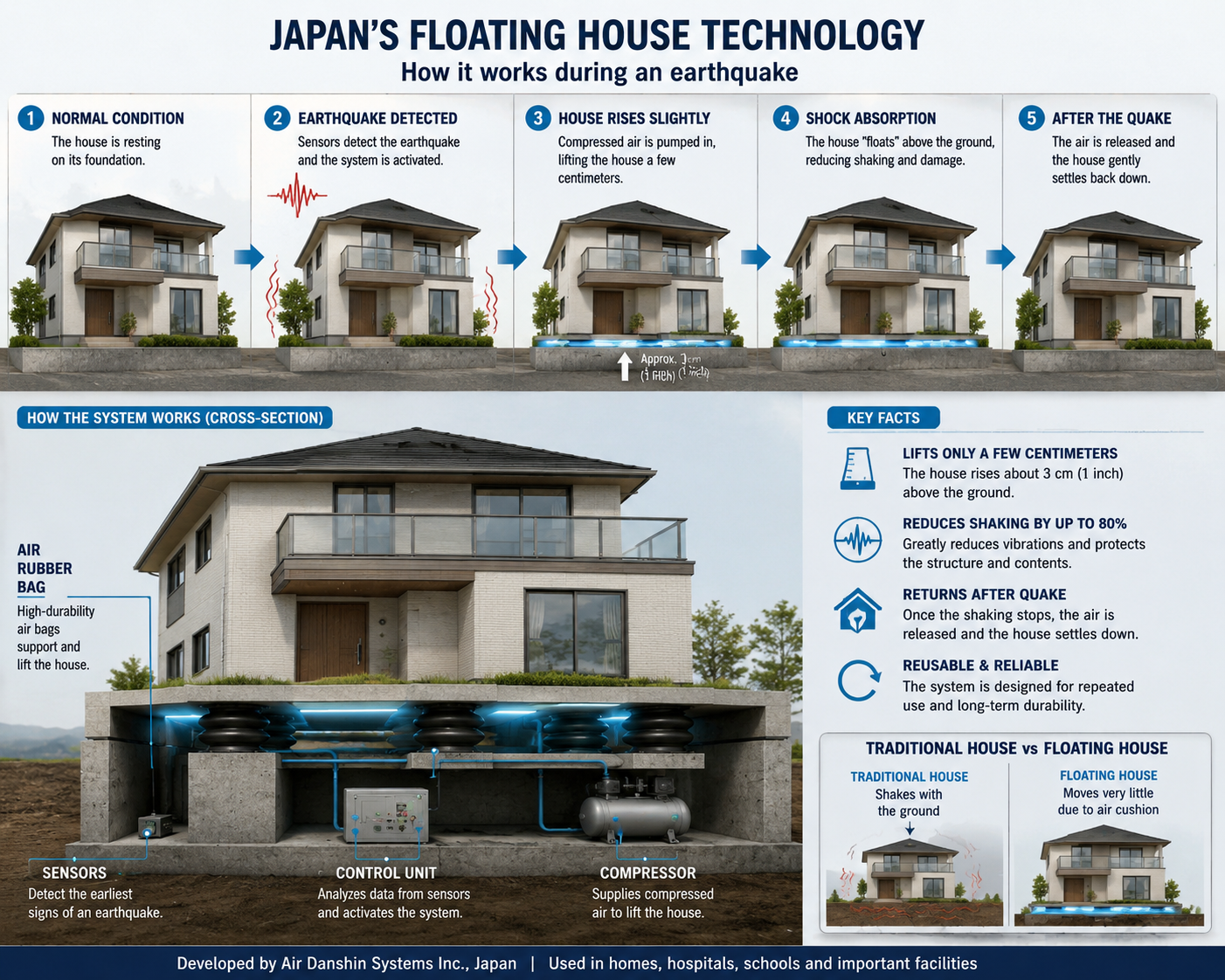
Japan is known for its advanced technology, and one of its latest inventions is a special kind of house designed to resist earthquakes. These houses use a unique system that allows them to “float” or “levitate” a little bit during an earthquake. But don’t worry, they don’t fly high above the ground!
How Do They Work?
When an earthquake happens, the ground shakes a lot, which can damage buildings. To protect against this, these innovative houses are built with a compressed air system. Here’s how it works:
- Lifting Mechanism: When an earthquake starts, the system quickly sends air into special cushions underneath the house. This lifts the house just a few centimeters (about 3 cm or 1 inch) above its foundation.
- Reducing Shaking: By floating slightly, the house can move gently with the shaking ground instead of being damaged by it. This means less stress on the building and fewer chances of breakage.
Why Is This Important?
Earthquakes can be very dangerous, especially in Japan, which experiences them often. Traditional houses can crack or collapse during a quake, putting people at risk. These floating houses help keep families safe and reduce damage.
The Future of Housing
As Japan continues to face natural disasters, innovative solutions like these floating houses may become more common. They represent a smart way to blend technology with safety, ensuring that homes can withstand the force of nature while keeping people secure inside.
In conclusion, Japan’s floating earthquake-resistant houses are a groundbreaking solution for a serious problem. By using modern technology to protect against earthquakes, these homes could lead the way for safer living environments around the world.
About the Author