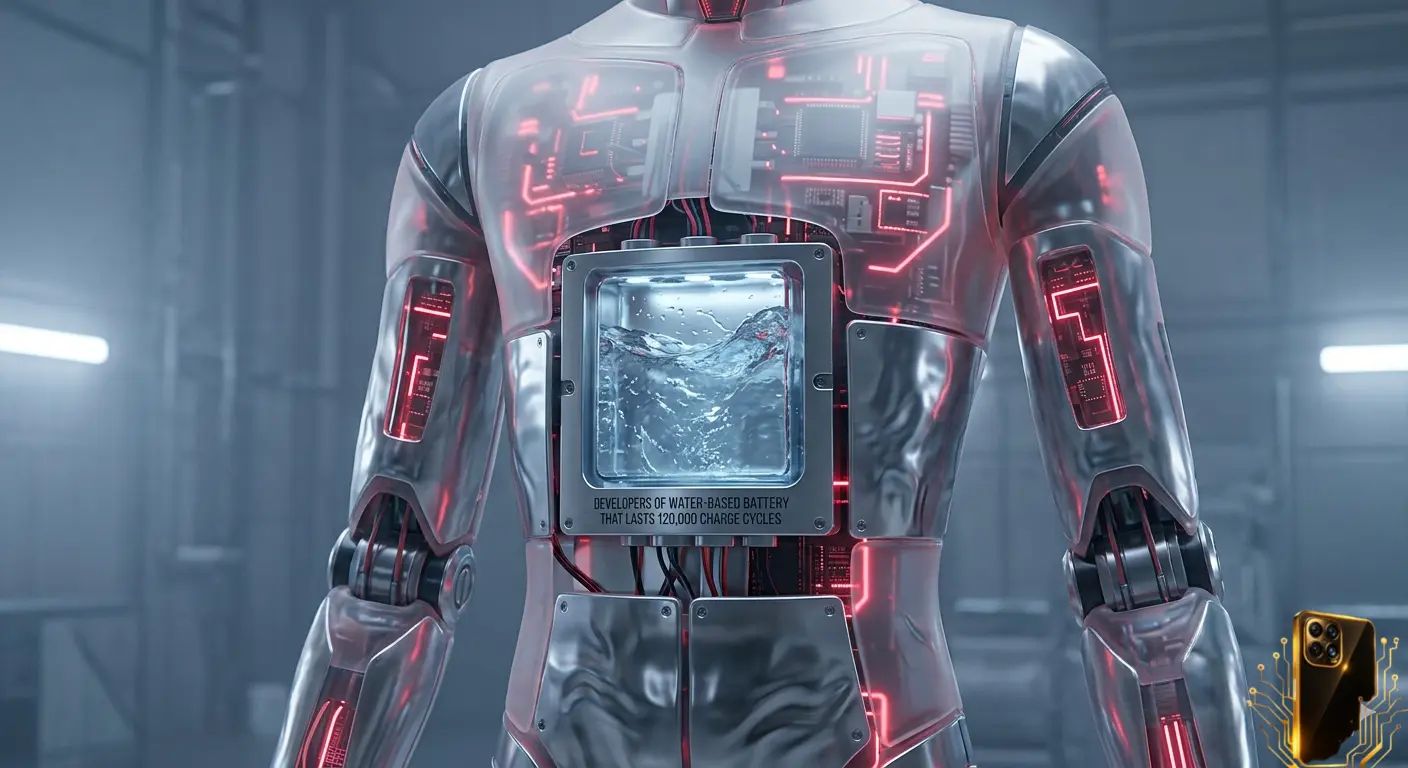
In a breakthrough In which more focus has been placed on the increasing requirement of large-scale energy storage, developed by researchers from hong kong university and Southern Sustainability of Science and Technology have developed an experimental water-based battery capable of lasting more than 120,000 charge cycles.
The surprising ingredient behind this innovation?
The new developed Technology were published in Nature Communications, one of the world’s leading scientific journals, in February 2026.
The Science Behind the Breakthrough:
Traditional lithium-ion batteries rely on organic electrolytes that can degrade over time due to corrosive chemical reactions. These reactions slowly damage the internal structure of the battery, limiting its lifespan.
The Chinese research team took a different approach.
They developed a neutral pH (7.0) aqueous electrolyte using magnesium and calcium chloride ,salts commonly found in tofu brine. By maintaining a neutral chemical environment, Which reduces internal damage to the battery and increases its lifespan.
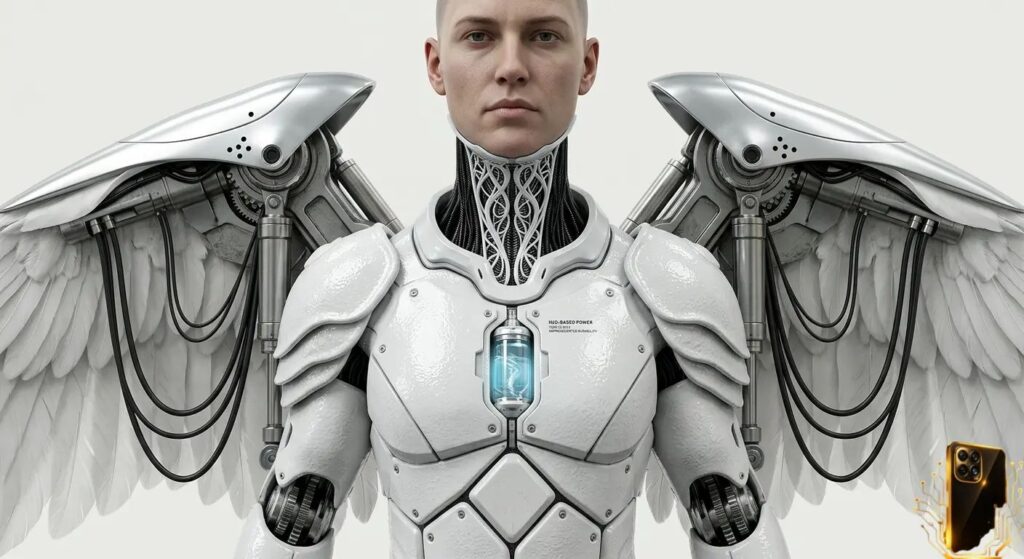
As lead researcher Li Wei explained, conventional batteries operate in chemically aggressive conditions. Their new system creates a stable environment that prevents the breakdown typically seen in long-term use.
120,000 Cycles — What Does That Really Mean?
To understand how impressive this is:
- Most lithium-ion batteries last between 1,000 to 3,000 cycles this working procedure mostly found in our home batteries
- Advanced grid-scale storage systems reach around 10,000 cycles
- This new prototype achieved over 120,000 cycles in laboratory testing
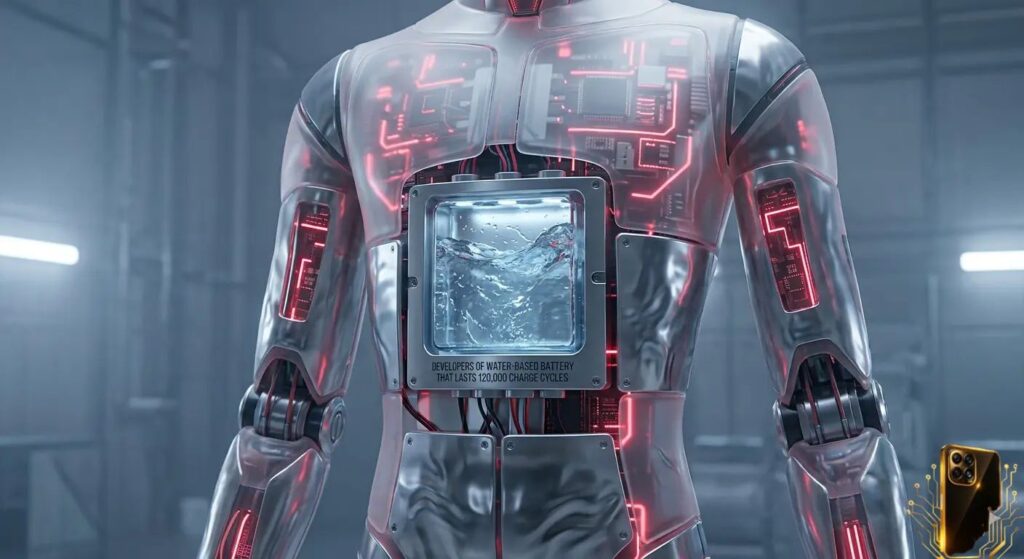
If charged once per day, So it may last for many years, but this was only laboratory testing, in the real world its durability may be reduced.
Still, the durability difference is massive.
Safety and Environmental Benefits
Beyond longevity, the new battery offers major safety advantages:
- ✅ Non-flammable
- ✅ Non-toxic
- ✅ Water-based chemistry
- ✅ Easier disposal compared to lithium-ion
As millions of lithium-ion batteries approach end-of-life globally, safer alternatives are becoming increasingly important for environmental sustainability.
The Tradeoff: Lower Energy Density
There is one limitation.
Water naturally breaks down at about 1.23 volts, while lithium-ion batteries operate between 3 to 4 volts. This means the new design has lower energy density — it stores less energy per unit of weight and size.
Because of this, it may not be suitable for:
- Electric vehicles
- Smartphones
- Compact consumer electronics
However, it could be ideal for:
- Solar farms
- Wind energy storage
- Data center backup systems
- Grid-scale energy balancing
In these applications, safety and long lifespan matter more than compact size.
Why This Matters for the Future of Energy
As renewable energy expands worldwide, the need for long-lasting, safe, and affordable energy storage is critical.
If successfully commercialized, this water-based battery technology could:
- Lower environmental impact
- Extend operational lifespan to decades
- Reduce fire risks in energy storage systems
- Decrease replacement and maintenance costs
While the technology is still in the research stage, it represents a promising step toward more sustainable battery solutions.
Final Verdict: The research is real, peer-reviewed, and scientifically credible.
However, the battery is still in the experimental phase and not yet commercially available
About the Author