
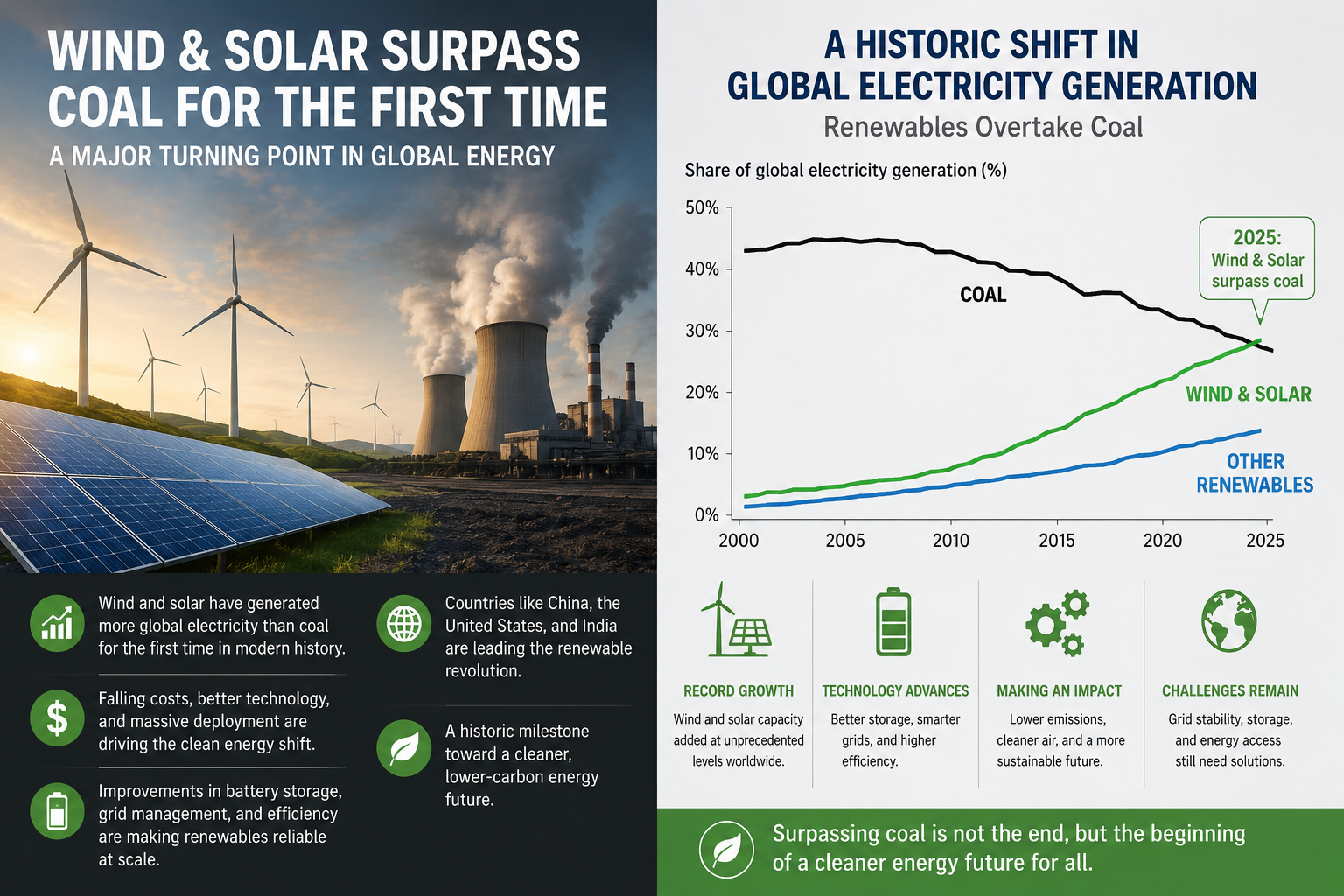
In a significant development for renewable energy, several reports have indicated that wind and solar power surpassed coal in electricity generation during parts of 2025, particularly in the first half of the year. This shift marks a crucial milestone in the ongoing global energy transition towards more sustainable and environmentally friendly sources.
Overview of the Findings
The reports, published by various environmental and energy research organizations, highlight the growing dominance of wind and solar energy in the global energy mix. With rapid advancements in technology, along with decreasing costs for renewable energy installations, wind and solar have become increasingly competitive with traditional fossil fuels like coal.
Key Factors Driving This Change
- Technological Advancements: Improvements in renewable energy technology have significantly increased the efficiency and reliability of wind turbines and solar panels, making them more viable options for power generation.
- Cost Reductions: The cost of producing electricity from wind and solar has dropped drastically over the past decade. Many new projects are now cheaper than new coal plants, which has accelerated the adoption of renewables worldwide.
- Policy Support: Governments around the world are increasingly implementing policies to support the growth of renewable energy. These include incentives for clean energy development, carbon pricing, and commitments to reduce greenhouse gas emissions.
- Public Awareness and Demand: There is a growing awareness among consumers about the impact of fossil fuels on climate change, leading to increased demand for cleaner energy sources.
Implications for the Energy Sector
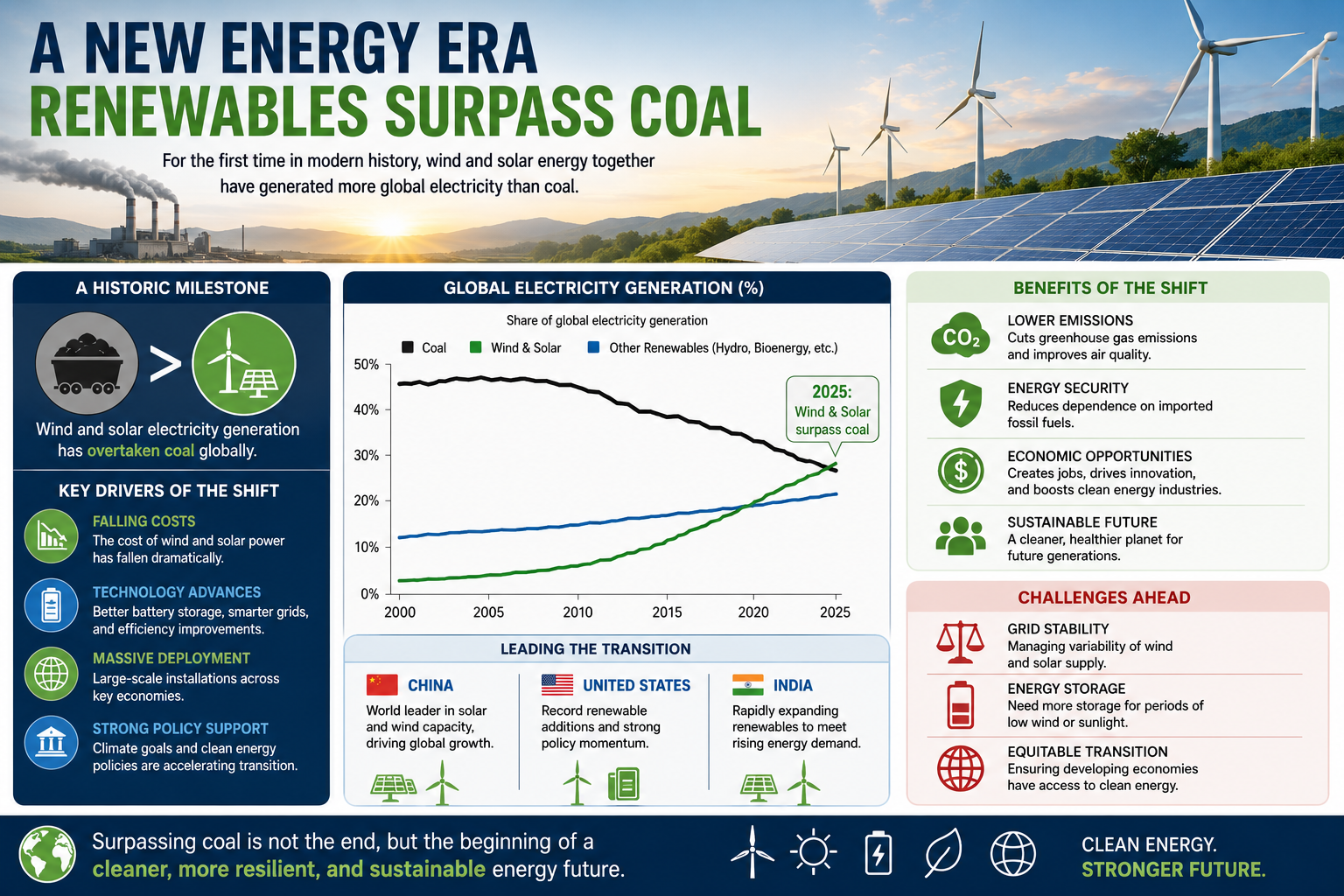
The surpassing of coal by wind and solar is not merely a numerical achievement; it represents a shift in how the global energy market operates. This transition has several implications:
- Investment Dynamics: As more capital flows into renewable energy projects, the market dynamics for energy investments will continue to evolve, shifting away from fossil fuel dependence.
- Job Creation: The growth of the renewables sector is expected to create millions of new jobs in manufacturing, installation, and maintenance, showcasing the economic benefits of a cleaner energy future.
- Environmental Benefits: A decrease in coal usage will contribute to a significant reduction in carbon emissions, improving air quality and combatting climate change.
Conclusion
The surpassing of coal by wind and solar during parts of 2025 represents a landmark moment in the global energy landscape. As the world continues to prioritize sustainability, it is crucial for governments, businesses, and individuals to support and invest in renewable energy sources. This transition not only helps mitigate climate change but also lays the groundwork for a more resilient and sustainable energy future.
About the Author